- The Lounge
- Posts
- Why Is Lifestyle Change Advice Often Ineffective?
Why Is Lifestyle Change Advice Often Ineffective?
Medicare changes shake specialty care / Quiet meetings signal hidden problems / AI works best with clear prompts

Dr. Mike Woo-Ming
December 10, 2025

The LOUNGE - A Newsletter for Savvy Physicians
We scour the net, selecting the most pertinent articles for the busy doc so you don’t have to! Here’s what kept our focus this week…
We don’t have a health knowledge problem—we have a behavior problem.
A new 2.5% “efficiency cut” is about to shake every corner of U.S. specialty medicine.
Harmony can be a red flag, signaling suppressed dissent rather than real alignment.
Treat AI like a specialist, not a magic box, and watch productivity soar.
Care transitions don’t just create confusion — they quietly turn medication lists into minefields.
Brand experience suffers when products arrive poorly packaged or damaged.
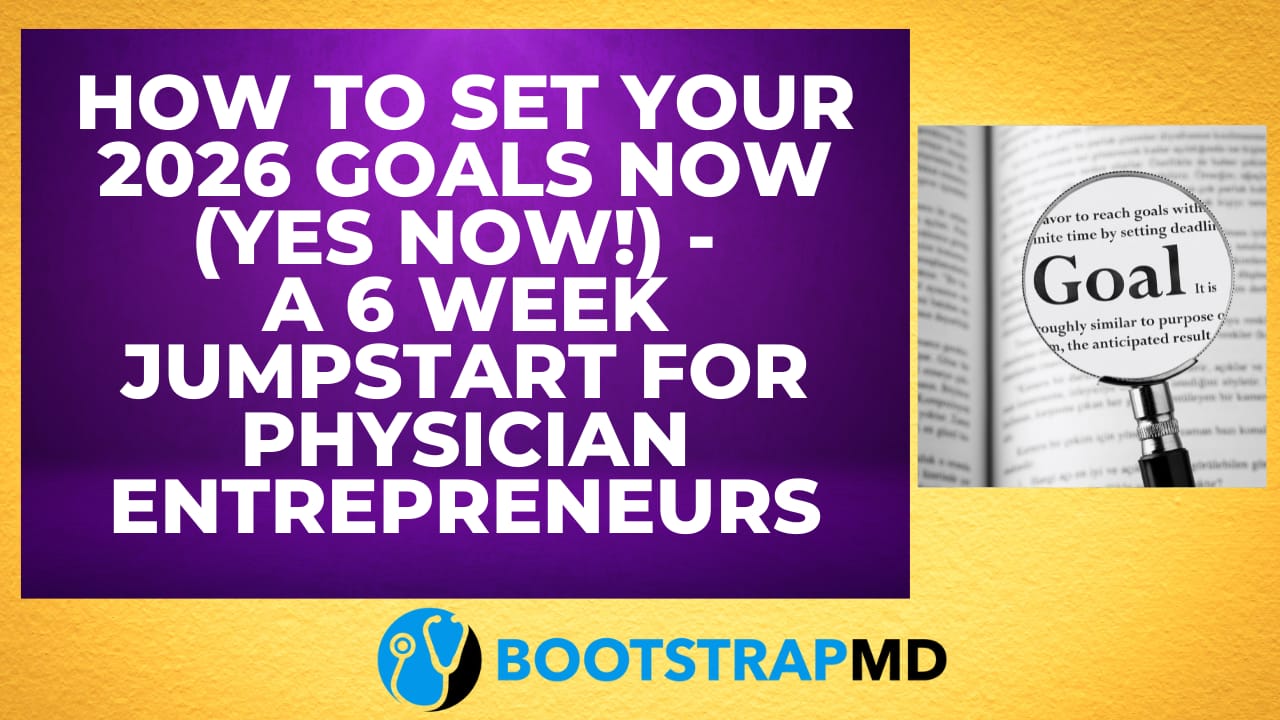
How to Set Your 2026 Goals Now (Yes Now!) - A 6 Week Jumpstart for Physician Entrepreneurs
Dr. Mike Woo-Ming urges physicians to ditch January goal-setting chaos and start now for a powerhouse 2026. Drawing from his experience building multiple seven-figure businesses, he explains why early planning reduces pressure, leverages seasonal lulls, and builds unstoppable momentum.
Join Doctors Online Success
A free discussion forum exclusively for physicians! Connect with like-minded doctors, share insights, and gain valuable strategies for success in medicine and beyond. Don't miss out—sign up today and start the conversation!
LOUNGE TALK
Lifestyle advice from physicians often fails because it collides with the realities of human behavior, not medical knowledge. Research shows that fewer than one in five patients sustain long-term change from counseling alone, underscoring that information isn’t the barrier—execution is. Vague recommendations like “eat better” or “exercise more” fall flat without specific, actionable guidance. Structural factors such as limited access to healthy food or safe exercise spaces, combined with psychological resistance and competing life demands, make change even harder. Behavioral science points to small, measurable goals and ongoing accountability as the strongest predictors of sustained success. Support systems—from family to digital tools—amplify follow-through by adding structure, community, and feedback. Ultimately, lifestyle change sticks only when physicians shift from lecturers to partners and patients translate broad advice into achievable steps.
Medicare’s 2026 physician fee schedule introduces a controversial 2.5% “efficiency adjustment” that cuts payments for more than 7,000 specialty procedures. While Congress previously approved a 2.5% pay increase for clinicians, CMS’s adjustment effectively cancels that benefit for specialists performing procedures, while primary care physicians retain the raise. CMS argues that improved technology and workflows mean procedures require fewer resources, justifying lower reimbursement. Specialists counter that patient complexity has increased, not decreased, and that real-world procedure times haven’t become more efficient. The divide has intensified tensions between CMS and the American Medical Association, whose traditional influence over rate-setting is now being challenged. Primary care groups applaud the shift, calling it overdue rebalancing, while specialists warn it will worsen shortages and destabilize practices. With conflicting data, political pressure, and wide specialty disparities, the impact of these changes will shape access, reimbursement, and physician behavior across the healthcare system in 2026.
Support Our Sponsor: Student Loan Planner
Concerned about medical student loans? It's time for a custom action plan. Talk with these experts who've helped over 11,000 borrowers take on $2.5 billion in student debt. Book your meeting today!
Many executive teams equate harmony with health, but conflict expert Amy Gallo argues that friction-free meetings often signal deeper organizational risks. When leaders nod along and avoid pushback, critical issues go unchallenged, and bad decisions can slip through unchecked. Research shows that productive conflict—thoughtful debate, dissent, and direct dialogue—correlates with stronger strategy, faster execution, and healthier team dynamics. Gallo emphasizes that the goal isn’t to create drama but to foster a culture where disagreement is safe, expected, and constructive. High-performing teams use conflict to test assumptions, expose blind spots, and pressure-test decisions before they scale. Leaders who avoid conflict often unintentionally suppress innovation and invite groupthink. Ultimately, the healthiest executive teams aren’t the quietest ones—they’re the ones courageous enough to disagree in service of better outcomes.
Prompt engineering is the single biggest accelerator for getting real value from AI — think of it like learning Excel two decades ago. Vague inputs produce weak outputs; precise, role-based prompts (tell the AI who it is, what to do, and the expected format) unlock professional-grade results across marketing, code, and research. The author advocates an iterative collaboration model: steer the AI, correct it mid-response, and refine until the output fits your needs. Use AI as an organizer and research assistant by uploading documents and asking concise synthesis questions to turn mountains of data into actionable insights. High-impact prompts follow a simple pattern: define role, set measurable goals, and specify output structure. For entrepreneurs and professionals, prompt engineering becomes a multiplier — enabling rapid prototyping, cheaper production of assets, and faster decision-making. The bottom line: invest time in crafting prompts and you’ll get exponentially better results.
Medication mismanagement during care transitions has become a major—and often overlooked—patient safety threat, especially as healthcare becomes more fragmented. Up to 80% of recently discharged patients experience medication discrepancies, creating blind spots that can persist for months or even years. Polypharmacy is now common among older adults, increasing the risk of drug interactions, inappropriate medications, and unintended continuation of short-term therapies. While digital tools, EHR data, and patient portals can support safer prescribing, their accuracy is only as good as the information clinicians and patients provide. Low-tech solutions like annual “brown bag” reviews often reveal what software misses: outdated prescriptions, forgotten drugs, undisclosed supplements, and dosing workarounds driven by cost. The article argues that primary care clinicians must act as “coordinators-in-chief,” owning the full medication list regardless of who prescribed each drug. In a fragmented system, consistent medication reconciliation at every encounter is essential for reducing preventable harm.
Cutting corners on logistics by selecting the lowest-cost third-party provider can backfire in major ways. Hidden fees, inefficient operations, and limited carrier options often erode the apparent savings, increasing parcel costs and reducing scalability. Low-cost providers can also damage your brand experience, delivering products poorly packaged or handled, which impacts customer satisfaction and loyalty. Technology and innovation may be lacking, leaving your business behind competitors who leverage real-time visibility, automation, and data-driven insights. Perhaps the most critical risk is insolvency: budget providers with unsustainable models can fail, stranding inventory and creating operational chaos. Premium logistics providers charge more, but their expertise, infrastructure, and strategic value save money, protect reputation, and enhance efficiency long-term. As the Picasso principle illustrates, investing in experience delivers outsized value that a cheap alternative rarely matches.
WANT TO REACH THOUSANDS OF FORWARD-THINKING PHYSICIANS? CONSIDER SPONSORSHIP. CONTACT US FOR DETAILS.

QUICK BITES
6 ways to turn your small town business into a local success story.
The 5 AI tensions leaders need to navigate.
Playing it safe is killing your brand.
Physician advocacy as a core clinical skill.
Like the newsletter? Share it with someone you know! If you have any feedback or suggestions for future issues, please don’t hesitate to reach out!
“Try not to become a man of success, but rather try to become a man of value."